
Colorado horse owners build with purpose. Along the Front Range, across the Western Slope, and in the foothills, barns and arenas must perform in snow, wind, sun exposure and rapid temperature shifts.
A well-designed equestrian structure is not only about layout. It must address structural loads, drainage, ventilation and long-term durability. Horse barn plans with arena layouts should be engineered for Colorado soil conditions, frost depth and year-round use to ensure safety, functionality and predictable operating costs.
If you are planning to build or upgrade, this guide outlines the structural and performance factors that matter most, including framing systems, insulation strategies, arena footing, drainage and dust control. The goal is to help you make informed decisions that support long-term durability, horse health and consistent arena conditions in Colorado.
What Is a Pole Barn?
A pole barn, also known as a post-frame building, is a structure supported by large, pressure-treated wood posts that are embedded in the ground or anchored to concrete piers. Instead of relying on continuous foundation walls like traditional stick-built construction, a pole barn transfers structural loads through these vertical posts and engineered roof trusses. This system allows for wide, open interior spaces with fewer load-bearing walls, making it ideal for agricultural buildings, horse barns, riding arenas, garages and workshops.
Modern pole barns are engineered to meet local and state building codes and are designed to handle specific wind and snow load requirements. Because posts are installed directly into the ground and trusses are prefabricated, construction is typically faster and more cost-efficient than conventional framing methods. The result is a durable, flexible structure that provides clear-span interiors and long-term performance.
Pole Barn Framing Techniques
Colorado’s climate doesn’t leave much room for compromise. Between mountain snow, chinook winds and dramatic temperature swings, your barn must be engineered to handle it all.
Pole barn construction, also known as post-frame construction, has become a leading choice for equestrian buildings because of its strength, flexibility and efficiency.
Engineered Post Placement
The backbone of any pole barn is its structural posts. Unlike traditional stick-frame buildings that rely on continuous foundations, pole barns use large, pressure-treated posts embedded in the ground or anchored to concrete piers.
For Colorado properties, this means:
- Deeper-set posts to account for frost depth
- Proper uplift resistance for high wind zones
- Reinforced corner and door-frame posts for large arena openings
When designed correctly, post-frame systems distribute loads efficiently, which is especially important for larger riding arenas.
Wide-Span Truss Systems
One of the biggest advantages of horse barn plans w/ arena layouts is the ability to create clear-span interiors. Riders want unobstructed space. Horses need room to move freely. That means fewer interior columns and more engineered trusses.
Modern laminated wood trusses can span 40, 60, or even 80 feet without interior support posts.
This allows:
- Full indoor arenas without structural interruptions
- Flexible stall and tack room configurations
- Future expansion options
For property owners building long-term equestrian estates, investing in engineered truss systems ensures structural integrity and architectural freedom.
Proper Bracing and Sheathing
High winds along the Front Range demand thoughtful lateral bracing. Diagonal bracing, shear walls, and metal paneling installed correctly add rigidity to the entire structure.
Steel siding and roofing are particularly popular in Colorado because they:
- Shed snow efficiently
- Resist hail damage
- Require minimal maintenance
A well-framed pole barn is not just about strength; it’s about longevity. When framing is done right, your structure will stand strong for decades.
Girt and Purlin Installation Methods
Wall girts and roof purlins provide lateral support and distribute loads across the structure. Their placement and orientation affect structural performance and insulation capability.
Common approaches include:
- Bookshelf girts installed between posts for improved insulation depth
- Flat girts fastened to post faces
- Purlins installed over or between trusses
The selected method influences wall strength, sheathing attachment and overall energy efficiency.
Foundation and Footing Systems
Even in post-frame construction, the foundation strategy plays a critical structural role.
Options include:
- Embedded pressure-treated posts set in concrete
- Precast concrete columns
- Post brackets anchored to monolithic slabs
- Continuous stem walls for added durability
Proper footing depth, frost protection and drainage planning are essential for long-term structural stability, especially in cold climates like Colorado.
Best Pole Barn Insulation Options
Colorado winters can be extreme. Even if your horses tolerate the cold well, your tack room, wash bay and lounge areas need to be comfortable and have moisture control.
Insulation is not an afterthought in modern horse barn plans with arena designs; it’s a core design decision.
Perimeter Slab Insulation
Concrete slabs are a major pathway for heat loss. Installing rigid insulation vertically along the slab edge or horizontally beneath the perimeter helps reduce heat transfer to the ground.
This is especially important in:
- Heated tack rooms
- Wash bays
- Barns with radiant floor systems
Without slab edge insulation, ground temperatures can pull heat away from conditioned areas, increasing operating costs and creating cold floor surfaces.
Fiberglass Batts with Vapor Barriers
For cost-conscious areas of the building, fiberglass batts remain a reliable solution. When paired with a proper vapor barrier, they can provide solid thermal performance.
This approach works well in:
- Storage spaces
- Heated tack rooms
- Grooming areas
However, correct installation is key. Gaps or compression reduce effectiveness, so professional installation is important.
Pole Barn Ventilation and Insulation Systems
Energy efficiency isn’t only about insulation. Balanced ventilation systems, ridge vents, cupolas and large overhead doors allow air circulation in summer while preventing moisture buildup in winter.
Architectural Design Options for Custom Wooden Pole Barns
There’s something timeless about wood. Many Colorado property owners prefer the warmth and aesthetic appeal of custom wooden pole barns.
Wood blends beautifully into mountain landscapes, rolling pastures and rural estates.
High-Quality Lumber Selection
Not all lumber is equal. Structural posts should be pressure-treated and rated for ground contact. Laminated columns add additional strength and stability.
Exterior wood siding options can include:
- Board and batten
- Rough sawn lumber
- Engineered wood panels
These materials offer durability with a refined appearance suitable for luxury properties.
Architectural Customization
Many buyers often want their barn to reflect their primary residence. Modern horse barn plans with arena designs can include:
- Stone accents
- Timber-frame entryways
- Custom cupolas
- Decorative stall fronts
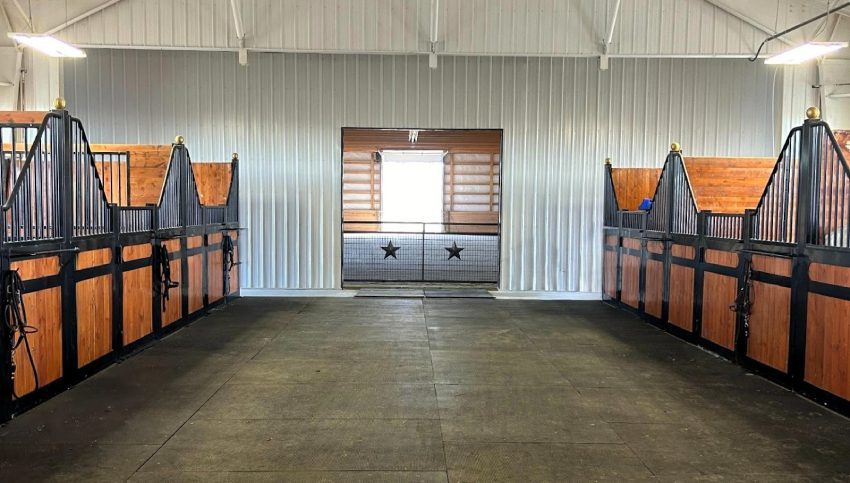
These features elevate a functional structure into a statement building.
Interior Craftsmanship
Inside, wooden finishes create warmth and sophistication. Tongue-and-groove ceilings, exposed beams and custom tack cabinetry transform everyday chores into an enjoyable experience.
Custom wooden pole barns aren’t just utilitarian—they’re lifestyle-driven spaces designed for efficiency and pride of ownership.
Best Horse Arena Footing Materials
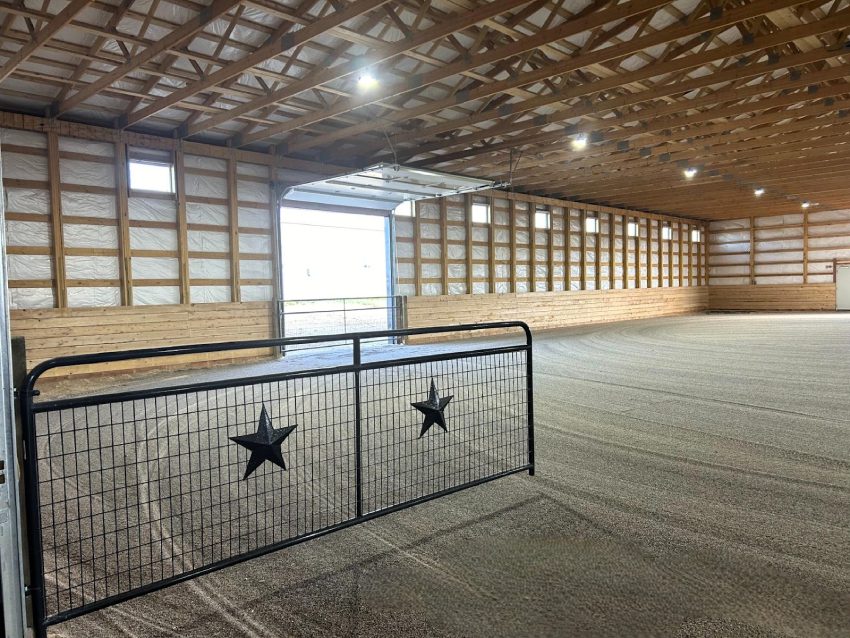
Footing is one of the most important investments in any riding arena. The right surface supports your horse’s joints, improves performance and reduces dust and maintenance. In Colorado, dry air, freeze-thaw cycles and water availability must all be considered when selecting materials.
Washed Sand Blends
High-quality, angular washed sand remains the foundation of many arena surfaces. Particle shape matters. Angular sand locks together and provides better stability than round sand, which tends to shift under load.
Benefits include:
- Good drainage
- Reliable traction
- Controlled cushioning
In Colorado’s dry climate, sand must be managed carefully to prevent dust, which is why many owners combine it with stabilizing additives.
Sand and Fiber Mixes
Synthetic fiber blended into sand increases stability and reduces shifting. This option is particularly popular for dressage and jumping arenas where consistent footing is essential.
Fiber mixes provide:
- Enhanced shock absorption
- Improved grip
- Longer lifespan
For private properties with frequent use, this blend delivers both performance and durability.
Rubber Additives
Crumb rubber mixed into sand improves elasticity and moisture retention. It reduces surface compaction and adds cushioning, particularly in high-impact disciplines.
However, rubber quality is critical. Inconsistent particle size or inferior materials can break down over time or create uneven footing zones.
When properly sourced and blended, rubber additives:
- Improve resilience
- Reduce dust when moisture is managed
- Support joint protection in intensive riding programs
Heat absorption should be considered for outdoor arenas at higher elevations.
Engineered Footing Systems
Engineered footing systems address more than just the top layer. They are built as layered assemblies designed to manage drainage, stability and long-term surface integrity.
These layered systems include:
- Compacted sub-base
- Crushed stone base
- Geotextile fabric
- Drainage layers
- Precision footing blends
These systems reduce water pooling, prevent base contamination and limit surface displacement. While the initial investment is higher, engineered assemblies significantly reduce long-term maintenance and surface replacement.
When selecting footing, consider:
- Your riding discipline
- Arena size and traffic levels
- Water access and dust control capacity
- Drainage conditions
- Maintenance schedule
In Colorado, moisture management is as important as traction. A properly layered system with controlled watering will outperform high-end surface materials installed over a weak base.
Top Riding Arena Dust Control Solutions
Colorado’s dry air is both a blessing and a challenge. While low humidity keeps footing from becoming muddy, it also increases dust, especially during the summer months.
Dust control is not simply about comfort; it protects equine respiratory health and improves overall riding quality.
Watering Systems
The simplest solution remains water. However, hand-watering large arenas is inefficient and inconsistent.
Automated sprinkler systems installed along arena perimeters deliver:
- Even moisture distribution
- Time savings
- Reduced water waste
For indoor arenas, overhead misting systems can be integrated discreetly into truss structures.
Arena Conditioning Equipment
Modern arena conditioners attach to tractors or utility vehicles and help maintain even moisture and consistent footing depth.
Regular dragging:
- Prevents compaction
- Reduces dust pockets
- Maintains a level surface
For property owners with private arenas, investing in quality conditioning equipment protects your footing investment.
Dust Suppressant Additives
Commercial dust control products can be mixed into footing materials. These products bind fine particles and retain moisture longer than water alone.
Popular options include:
- Hygroscopic salts (used carefully to avoid corrosion)
- Organic binding agents
- Polymer-based stabilizers
When professionally applied, these additives significantly reduce airborne dust without harming horses.
Proper Drainage and Base Construction
Dust problems often trace back to improper base construction. A well-drained, compacted base prevents uneven moisture pockets and surface breakdown.
A properly engineered arena base typically includes:
- Compacted subgrade
- Crushed stone base
- Drainage layer
- Geotextile separation fabric
Without stable base construction, dust control efforts become temporary fixes rather than lasting solutions.
When building new horse barn plans with arena structures, dust control should be discussed from the beginning, not as an afterthought.
Designing Horse Barn Plans with Arena for Colorado Climates
Building a barn and arena in Colorado is about more than shelter. It’s about creating a space that supports your passion, protects your horses and improves your property’s value.
Thoughtful horse barn plans with arena layouts combine:
- Engineered framing for strength
- Smart insulation for year-round comfort
- Custom wood craftsmanship for timeless appeal
- Advanced footing systems for performance
- Proactive dust control for health and maintenance
If you are planning equestrian arena construction for a private retreat or upgrading an existing facility, every detail matters. With proper planning and professional construction, your barn and arena can serve you beautifully for decades.
Contact Expert Horse Barn and Arena Builders in Colorado
Every property presents different site conditions, goals and budget considerations. The success of horse barn plans with arena projects depends on early evaluation of layout, grading, drainage and long-term use requirements. Clear planning at the beginning prevents costly adjustments later.
If you are ready to move from concept to construction, request a quote to start defining your project scope and timeline. For site-specific guidance and detailed planning, contact us to speak with the team at Peak Pole Barns and Manufacturing about your Colorado build.